 Add to Chrome
 Add to Firefox
 Add to Edge
Artificial Entanglement in the Fine-Tuning of Large Language Models
Jan 11, 2026
Large language models (LLMs) can be adapted to new tasks using parameter-efficient fine-tuning (PEFT) methods that modify only a small number of trainable parameters, often through low-rank updates. In this work, we adopt a quantum-information-inspired perspective to understand their effectiveness. From this perspective, low-rank parameterizations naturally correspond to low-dimensional Matrix Product States (MPS) representations, which enable entanglement-based characterizations of parameter structure. Thereby, we term and measure "Artificial Entanglement", defined as the entanglement entropy of the parameters in artificial neural networks (in particular the LLMs). We first study the representative low-rank adaptation (LoRA) PEFT method, alongside full fine-tuning (FFT), using LLaMA models at the 1B and 8B scales trained on the Tulu3 and OpenThoughts3 datasets, and uncover: (i) Internal artificial entanglement in the updates of query and value projection matrices in LoRA follows a volume law with a central suppression (termed as the "Entanglement Valley"), which is sensitive to hyper-parameters and is distinct from that in FFT; (ii) External artificial entanglement in attention matrices, corresponding to token-token correlations in representation space, follows an area law with logarithmic corrections and remains robust to LoRA hyper-parameters and training steps. Drawing a parallel to the No-Hair Theorem in black hole physics, we propose that although LoRA and FFT induce distinct internal entanglement signatures, such differences do not manifest in the attention outputs, suggesting a "no-hair" property that results in the effectiveness of low rank updates. We further provide theoretical support based on random matrix theory, and extend our analysis to an MPS Adaptation PEFT method, which exhibits qualitatively similar behaviors.

JMedEthicBench: A Multi-Turn Conversational Benchmark for Evaluating Medical Safety in Japanese Large Language Models
Jan 04, 2026As Large Language Models (LLMs) are increasingly deployed in healthcare field, it becomes essential to carefully evaluate their medical safety before clinical use. However, existing safety benchmarks remain predominantly English-centric, and test with only single-turn prompts despite multi-turn clinical consultations. To address these gaps, we introduce JMedEthicBench, the first multi-turn conversational benchmark for evaluating medical safety of LLMs for Japanese healthcare. Our benchmark is based on 67 guidelines from the Japan Medical Association and contains over 50,000 adversarial conversations generated using seven automatically discovered jailbreak strategies. Using a dual-LLM scoring protocol, we evaluate 27 models and find that commercial models maintain robust safety while medical-specialized models exhibit increased vulnerability. Furthermore, safety scores decline significantly across conversation turns (median: 9.5 to 5.0, $p < 0.001$). Cross-lingual evaluation on both Japanese and English versions of our benchmark reveals that medical model vulnerabilities persist across languages, indicating inherent alignment limitations rather than language-specific factors. These findings suggest that domain-specific fine-tuning may accidentally weaken safety mechanisms and that multi-turn interactions represent a distinct threat surface requiring dedicated alignment strategies.
An Analytic Theory of Quantum Imaginary Time Evolution
Oct 26, 2025Quantum imaginary time evolution (QITE) algorithm is one of the most promising variational quantum algorithms (VQAs), bridging the current era of Noisy Intermediate-Scale Quantum devices and the future of fully fault-tolerant quantum computing. Although practical demonstrations of QITE and its potential advantages over the general VQA trained with vanilla gradient descent (GD) in certain tasks have been reported, a first-principle, theoretical understanding of QITE remains limited. Here, we aim to develop an analytic theory for the dynamics of QITE. First, we show that QITE can be interpreted as a form of a general VQA trained with Quantum Natural Gradient Descent (QNGD), where the inverse quantum Fisher information matrix serves as the learning-rate tensor. This equivalence is established not only at the level of gradient update rules, but also through the action principle: the variational principle can be directly connected to the geometric geodesic distance in the quantum Fisher information metric, up to an integration constant. Second, for wide quantum neural networks, we employ the quantum neural tangent kernel framework to construct an analytic model for QITE. We prove that QITE always converges faster than GD-based VQA, though this advantage is suppressed by the exponential growth of Hilbert space dimension. This helps explain certain experimental results in quantum computational chemistry. Our theory encompasses linear, quadratic, and more general loss functions. We validate the analytic results through numerical simulations. Our findings establish a theoretical foundation for QITE dynamics and provide analytic insights for the first-principle design of variational quantum algorithms.
Dynamic Trajectory Optimization and Power Control for Hierarchical UAV Swarms in 6G Aerial Access Network
Aug 26, 2025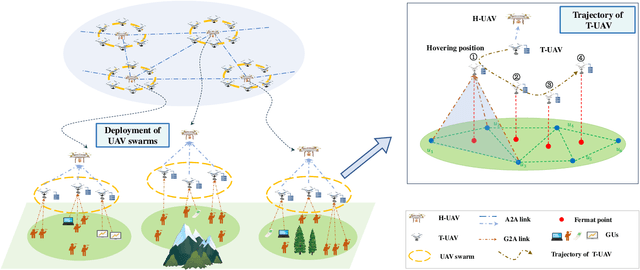
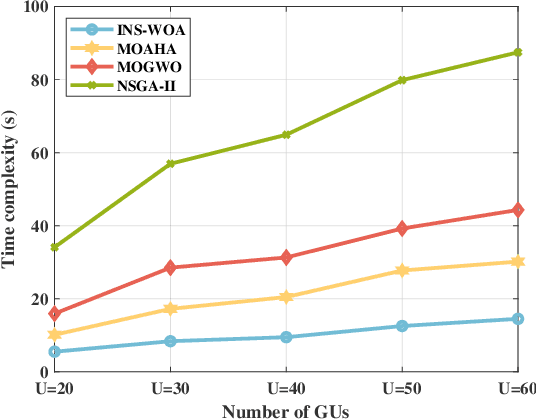
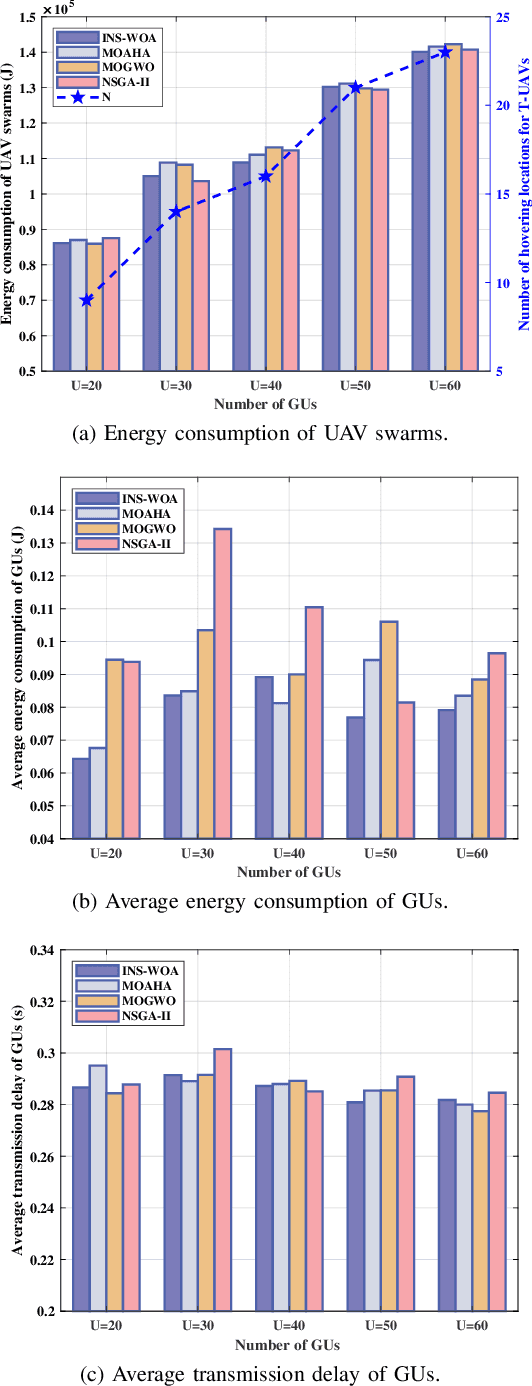
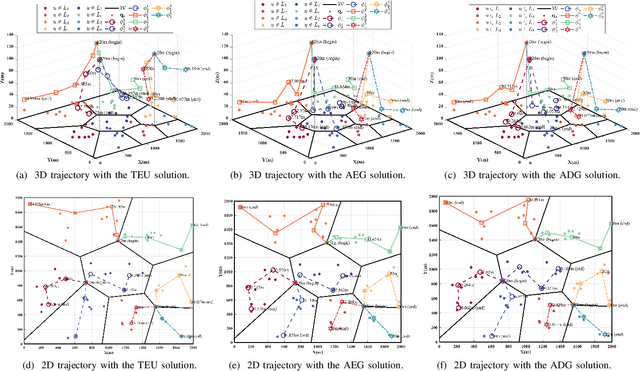
Unmanned aerial vehicles (UAVs) can serve as aerial base stations (BSs) to extend the ubiquitous connectivity for ground users (GUs) in the sixth-generation (6G) era. However, it is challenging to cooperatively deploy multiple UAV swarms in large-scale remote areas. Hence, in this paper, we propose a hierarchical UAV swarms structure for 6G aerial access networks, where the head UAVs serve as aerial BSs, and tail UAVs (T-UAVs) are responsible for relay. In detail, we jointly optimize the dynamic deployment and trajectory of UAV swarms, which is formulated as a multi-objective optimization problem (MOP) to concurrently minimize the energy consumption of UAV swarms and GUs, as well as the delay of GUs. However, the proposed MOP is a mixed integer nonlinear programming and NP-hard to solve. Therefore, we develop a K-means and Voronoi diagram based area division method, and construct Fermat points to establish connections between GUs and T-UAVs. Then, an improved non-dominated sorting whale optimization algorithm is proposed to seek Pareto optimal solutions for the transformed MOP. Finally, extensive simulations are conducted to verify the performance of proposed algorithms by comparing with baseline mechanisms, resulting in a 50% complexity reduction.
Advancing Quantum Information Science Pre-College Education: The Case for Learning Sciences Collaboration
Aug 01, 2025As quantum information science advances and the need for pre-college engagement grows, a critical question remains: How can young learners be prepared to participate in a field so radically different from what they have encountered before? This paper argues that meeting this challenge will require strong interdisciplinary collaboration with the Learning Sciences (LS), a field dedicated to understanding how people learn and designing theory-guided environments to support learning. Drawing on lessons from previous STEM education efforts, we discuss two key contributions of the learning sciences to quantum information science (QIS) education. The first is design-based research, the signature methodology of learning sciences, which can inform the development, refinement, and scaling of effective QIS learning experiences. The second is a framework for reshaping how learners reason about, learn and participate in QIS practices through shifts in knowledge representations that provide new forms of engagement and associated learning. We call for a two-way partnership between quantum information science and the learning sciences, one that not only supports learning in quantum concepts and practices but also improves our understanding of how to teach and support learning in highly complex domains. We also consider potential questions involved in bridging these disciplinary communities and argue that the theoretical and practical benefits justify the effort.
Face recognition on point cloud with cgan-top for denoising
Jun 07, 2025Face recognition using 3D point clouds is gaining growing interest, while raw point clouds often contain a significant amount of noise due to imperfect sensors. In this paper, an end-to-end 3D face recognition on a noisy point cloud is proposed, which synergistically integrates the denoising and recognition modules. Specifically, a Conditional Generative Adversarial Network on Three Orthogonal Planes (cGAN-TOP) is designed to effectively remove the noise in the point cloud, and recover the underlying features for subsequent recognition. A Linked Dynamic Graph Convolutional Neural Network (LDGCNN) is then adapted to recognize faces from the processed point cloud, which hierarchically links both the local point features and neighboring features of multiple scales. The proposed method is validated on the Bosphorus dataset. It significantly improves the recognition accuracy under all noise settings, with a maximum gain of 14.81%.
GroverGPT-2: Simulating Grover's Algorithm via Chain-of-Thought Reasoning and Quantum-Native Tokenization
May 08, 2025Quantum computing offers theoretical advantages over classical computing for specific tasks, yet the boundary of practical quantum advantage remains an open question. To investigate this boundary, it is crucial to understand whether, and how, classical machines can learn and simulate quantum algorithms. Recent progress in large language models (LLMs) has demonstrated strong reasoning abilities, prompting exploration into their potential for this challenge. In this work, we introduce GroverGPT-2, an LLM-based method for simulating Grover's algorithm using Chain-of-Thought (CoT) reasoning and quantum-native tokenization. Building on its predecessor, GroverGPT-2 performs simulation directly from quantum circuit representations while producing logically structured and interpretable outputs. Our results show that GroverGPT-2 can learn and internalize quantum circuit logic through efficient processing of quantum-native tokens, providing direct evidence that classical models like LLMs can capture the structure of quantum algorithms. Furthermore, GroverGPT-2 outputs interleave circuit data with natural language, embedding explicit reasoning into the simulation. This dual capability positions GroverGPT-2 as a prototype for advancing machine understanding of quantum algorithms and modeling quantum circuit logic. We also identify an empirical scaling law for GroverGPT-2 with increasing qubit numbers, suggesting a path toward scalable classical simulation. These findings open new directions for exploring the limits of classical simulatability, enhancing quantum education and research, and laying groundwork for future foundation models in quantum computing.
Quantum repeaters enhanced by vacuum beam guides
Apr 22, 2025The development of large-scale quantum communication networks faces critical challenges due to photon loss and decoherence in optical fiber channels. These fundamentally limit transmission distances and demand dense networks of repeater stations. This work investigates using vacuum beam guides (VBGs)-a promising ultra-low-loss transmission platform-as an alternative to traditional fiber links. By incorporating VBGs into repeater-based architectures, we demonstrate that the inter-repeater spacing can be substantially extended, resulting in fewer required nodes and significantly reducing hardware and operational complexity. We perform a cost-function analysis to quantify performance trade-offs across first, second, and third-generation repeaters. Our results show that first-generation repeaters reduce costs dramatically by eliminating entanglement purification. Third-generation repeaters benefit from improved link transmission success, which is crucial for quantum error correction. In contrast, second-generation repeaters exhibit a more nuanced response; although transmission loss is reduced, their performance remains primarily limited by logical gate errors rather than channel loss. These findings highlight that while all repeater generations benefit from reduced photon loss, the magnitude of improvement depends critically on the underlying error mechanisms. Vacuum beam guides thus emerge as a powerful enabler for scalable, high-performance quantum networks, particularly in conjunction with near-term quantum hardware capabilities.
Towards efficient quantum algorithms for diffusion probability models
Feb 20, 2025A diffusion probabilistic model (DPM) is a generative model renowned for its ability to produce high-quality outputs in tasks such as image and audio generation. However, training DPMs on large, high-dimensional datasets such as high-resolution images or audio incurs significant computational, energy, and hardware costs. In this work, we introduce efficient quantum algorithms for implementing DPMs through various quantum ODE solvers. These algorithms highlight the potential of quantum Carleman linearization for diverse mathematical structures, leveraging state-of-the-art quantum linear system solvers (QLSS) or linear combination of Hamiltonian simulations (LCHS). Specifically, we focus on two approaches: DPM-solver-$k$ which employs exact $k$-th order derivatives to compute a polynomial approximation of $\epsilon_\theta(x_\lambda,\lambda)$; and UniPC which uses finite difference of $\epsilon_\theta(x_\lambda,\lambda)$ at different points $(x_{s_m}, \lambda_{s_m})$ to approximate higher-order derivatives. As such, this work represents one of the most direct and pragmatic applications of quantum algorithms to large-scale machine learning models, presumably talking substantial steps towards demonstrating the practical utility of quantum computing.
Generative Adversarial Networks Bridging Art and Machine Intelligence
Feb 09, 2025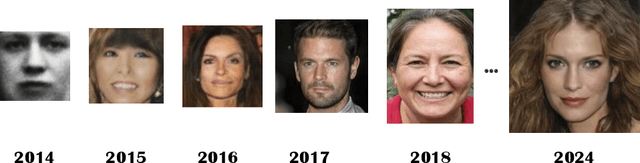

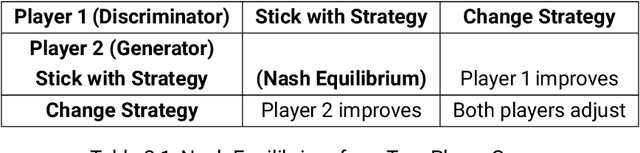

Generative Adversarial Networks (GAN) have greatly influenced the development of computer vision and artificial intelligence in the past decade and also connected art and machine intelligence together. This book begins with a detailed introduction to the fundamental principles and historical development of GANs, contrasting them with traditional generative models and elucidating the core adversarial mechanisms through illustrative Python examples. The text systematically addresses the mathematical and theoretical underpinnings including probability theory, statistics, and game theory providing a solid framework for understanding the objectives, loss functions, and optimisation challenges inherent to GAN training. Subsequent chapters review classic variants such as Conditional GANs, DCGANs, InfoGAN, and LAPGAN before progressing to advanced training methodologies like Wasserstein GANs, GANs with gradient penalty, least squares GANs, and spectral normalisation techniques. The book further examines architectural enhancements and task-specific adaptations in generators and discriminators, showcasing practical implementations in high resolution image generation, artistic style transfer, video synthesis, text to image generation and other multimedia applications. The concluding sections offer insights into emerging research trends, including self-attention mechanisms, transformer-based generative models, and a comparative analysis with diffusion models, thus charting promising directions for future developments in both academic and applied settings.